info-naijatreks@doc.com
- rss
- youtube

So Much to See in Lagos: Photos from Epe Fish Market, Eredo Moat and Awolowo’s Museum
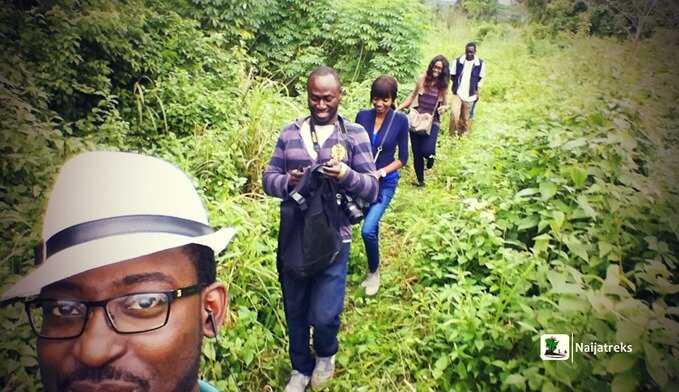
The skies poured out its showers in torrents on Saturday morning. We had a busy day ahead: we were going to explore the alluring rain forests of Eredo, beach-side Awolowo Museum and bustling lagoon-shore Fish Market of Epe. But it seemed the heavens had chosen this particular day to cast pallor. Despite this, our enthusiasm did not wane. The sweet charm of wanderlust would not let us give up on our mission.
We started out a bit late at 8.15am but we had high hopes that we were going to have some awesome fun as usual. Our first stop was the Awolowo Museum located at the beach town of town of Lekki, about 40 minutes drive from Victoria Island, Lagos. We finally located the museum after missing our way and getting back on the right route. The Awolowo Institute and Public Policy Museum and resource centre is located in the heart of Lekki town just off the turning by the Lekki LCDA. Driving on the interlocking bricks that pave the way to the centre, you get knocked off your senses by the picturesque view of the beach front right in front you.
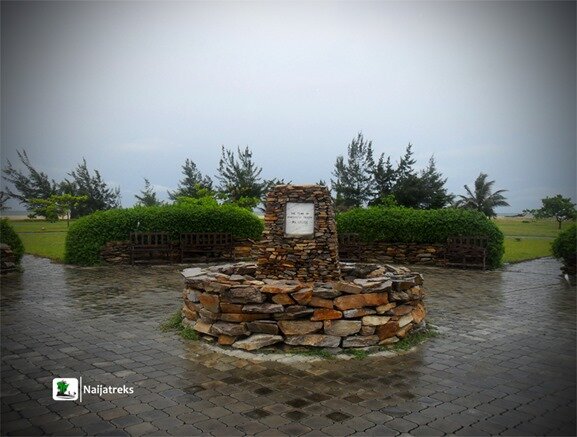
We were met by the keepers of the museum, headed by Prince Abdulahi Ogunbekun who is the Assistant Curator. Entry fee was charged at #1000 naira per person for our party of five persons but after much haggling and cajoling, our Lagos-sense triumphed and the fee was reduced. The tour around the museum began with a brief history of the Lekki town itself- a misnomer of the name of the Portuguese slave merchant, Mr Lecqi, who settled in the town. Mr lecqi is said to be buried upright in the ground at a point within vicinity of the museum, where a stone work marks the grave, but without his skull which has since been taken back to Portugal by his son. The Original house which was the detention centre for Awolowo in 1962 is also said to be Mr Lecqi’s home in the 18th Century.
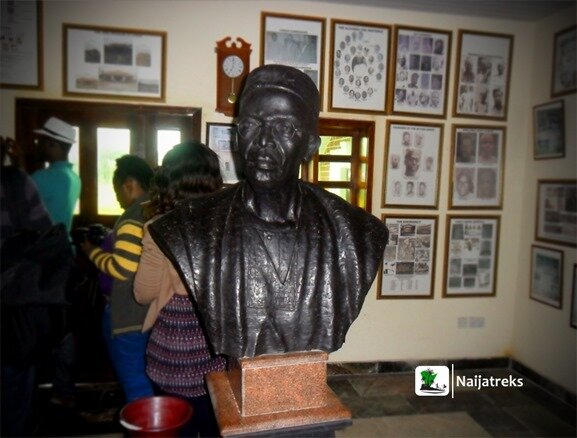
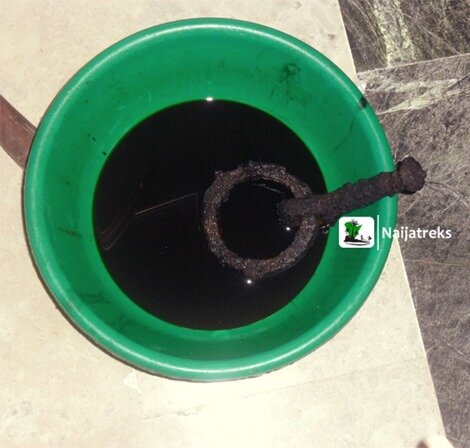
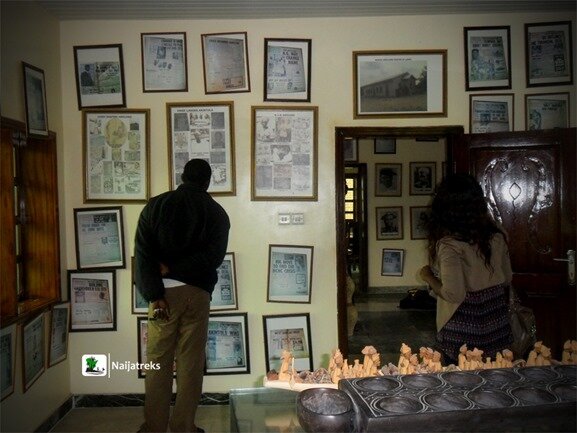
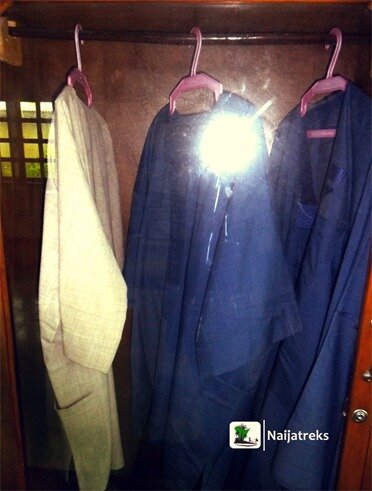
After this short history, the doors of the museum were opened and we were welcomed by a beautiful sculpture of the great Awo’ himself standing at the middle of the room. Unlike most museums, there were not many artifacts here, rather a huge load of history, documented and preserved in various forms, can be seen framed all over the room. A wardrobe containing about three of Awolowo’s clothes, two of his shoes, his trademark cap, his eye glasses and an open book purportedly read by him stood at conspicuous positions in the room. Within a clear glass box lies the material from the original bedding Lecqi used while on the floor sat a bowl with an iron shackle inside it which is said to be the hand shackle used by Lecqi when transporting slaves back in his days. An antechamber outside the building housed the bathtub Lecqi used. It was awesome to observe similarities between the artifacts of slave trade at Badagry with the few ones displayed here at Awolowo’s Museum. As soon as we completed our tour of the museum, the beach beckoned and we took off to the sprawling white sands that glistened at every crash of the ocean waves that roll upon its shores. The view of the Atlantic was breath-taking. The beach was very serene and undisturbed, and with a couple of huts interspersed with coconut trees at regular intervals it presents a perfect get-away for the nature lover.
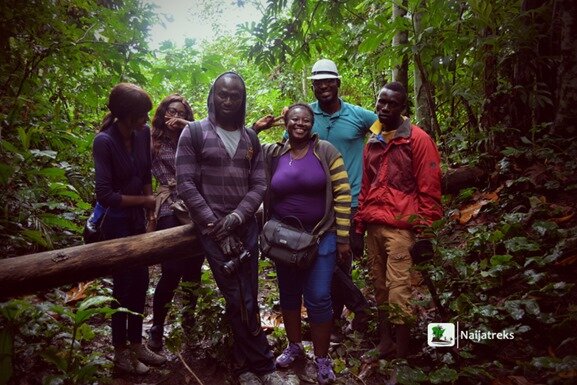
We departed Lekki town and drove down to Eredo town where we hiked through the 20-feet dug Sungbo Eredo. We met Eredo’s custodian, Baba Sunny, who was glad to see us again. He quickly assigned one of his sons to take us to the moat. The landscape had changed since our last visit during the dry season earlier in the year. We had to contend with overhanging branches and running stems sprouting more leaves due to the season. The floor of the ancient moat, rugged with decaying plants was so slippery that we had to constantly watch our steps, with the ladies asking for help almost every time. Beautiful millipedes crept and crawled gracefully along the moat walls, as charming butterflies perched and sucked at blooming flowers of wild forest plants. We spotted Sungbo’s mysterious pot of water sitting quietly beneath tall trees at a corner of the moat. The ‘never-drying’ and never-overflowing water is said to cure chicken pox known in the Yoruba language as “Ita”. It is said that all an infected person needs to do is wash with the water or drink it and the person is cured. Baba Sunny later treated us to some history about the woman called Sungbo, who is purported to be the Biblical Queen of Sheba.
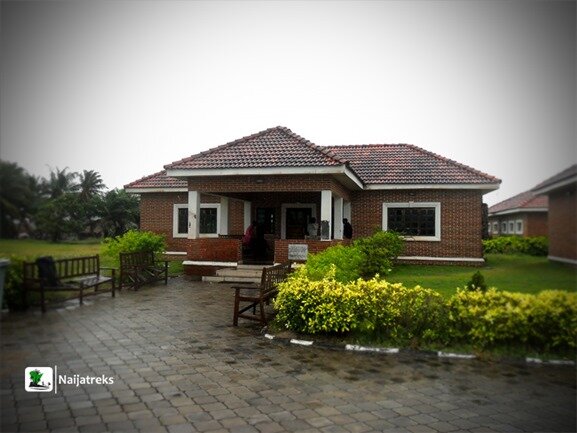 – Awolowo Museum
We journeyed from the town of Eredo to the town of Epe to visit its popular seafood market. The seafood market is locally known as Oluwo Market. It is situated at the mouth of the Lagos lagoon, where it connects to the sea. As we we entered through the market gates, we beheld a massive fish being laid on a raffia bag and sliced up into large chunks by the merciless cutlass of a market woman. We seemed out of place in this setting with cameras in hand and starring in wonder at the enormous size of the fishes displayed in stalls at the market. One of the market women walked up tp us and welcomed us, asking us what type of fish we want to buy.
Within a short while, we struck up a conversation with her and she became our tour guide. Her name is Iyabo, and she is a fish cleaner at the market. She took us around the busy market, telling us the names of the fishes on the display albeit in Yoruba. The air at the market was dense with the smell of fishes everywhere. We snaked through the narrow spaces between stalls with basketfuls of fishes, shrimps, prawns and snails. Noticeably absent was crab. When asked about this, Iyabo said, “A ko gbadura akan o”, meaning “we do not pray for crabs when we go fishing”, as crabs cuts their nets in the waters; therefore, they’ll rather not hunt for crabs. Fishes such as Tilapia, Catfish (Obokun), Ayika, Akokoniku, Chinese, Eja Osan, Kuta, Red Snapper, Wessafun and Abo, Lakoro are the common species found and sold at this market. The people who sold the sea foods were different from the people who cleaned and those that manned the jetty. The cleaners were the ones who take you around and help with your purchase if you were of a mind to have your purchase cleaned at the market. This is the group Iyabo belonged to. They take your produce, and do a basic cleaning like de-scaling your fishes and cutting them up, de-shelling your snails and also your prawns and shrimps for a fee.
Many of the market women declined to have their pictures taken. They were too shy. Activities at the fish market dwindled as sunset gradually neared. The market is said to be at its busiest in the morning between 8am and 10am when the sea-bound fishing canoes return to offload their catches. We spent our remaining time at the market buying fishes to take back to Lagos, and by the time we left, the sun had gradually began to se, so we couldn’t have our planned pepper soup hangout. However, we hope to return to the town to savor its legendary fish pepper soup.
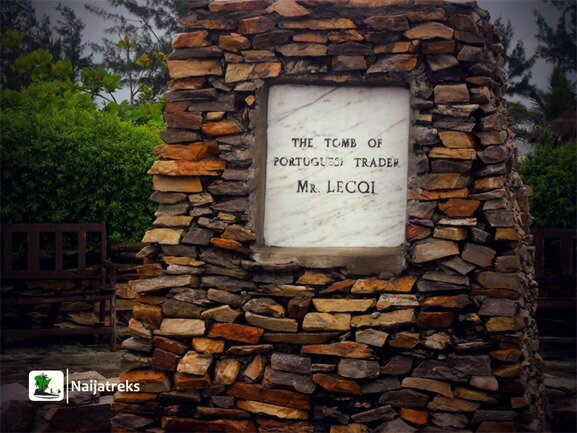 – Burial place of Mr. Lecqi
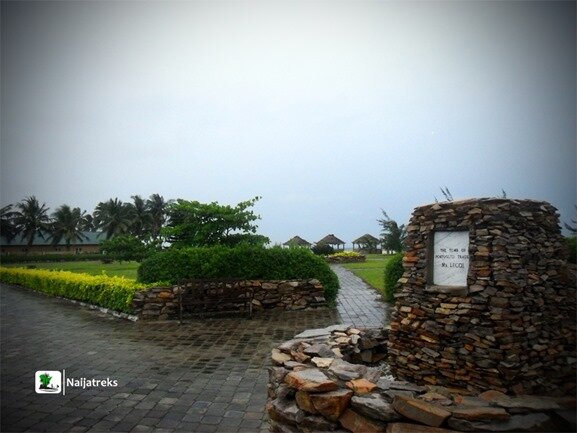
– Burial place of Mr. Lecqi with a walkway leading to the beautiful beach.
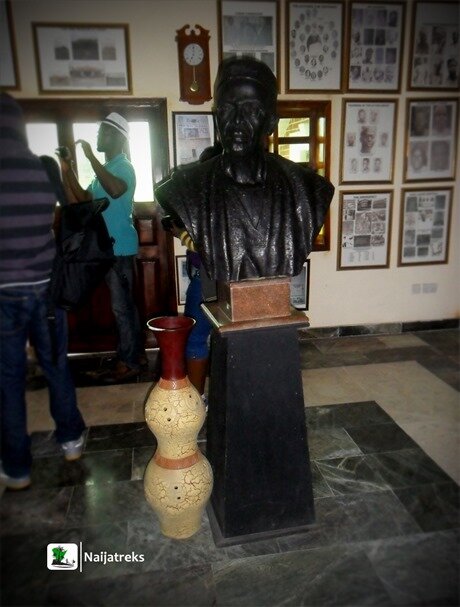 – Awolowo’s bust statue at the museum.
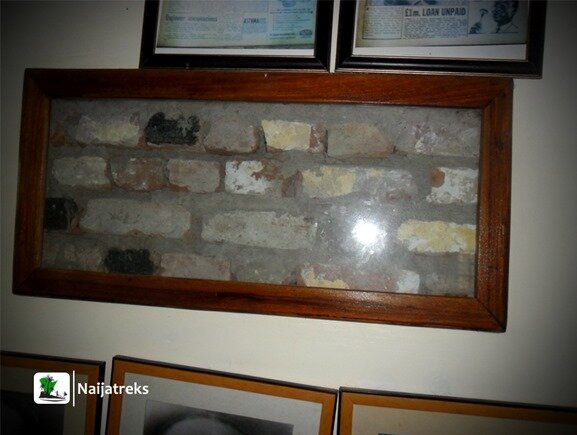
– The original wall of the museum preserved in glass. The building is said to be the prison cell of Awolowo for a couple of months during his undeserved at the law court in Lagos.
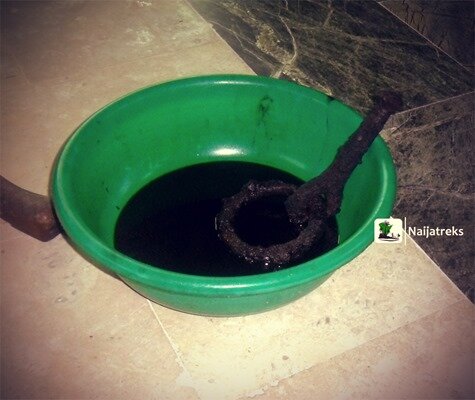
– The iron shackle used by Lecqi when transporting slaves back in his days.
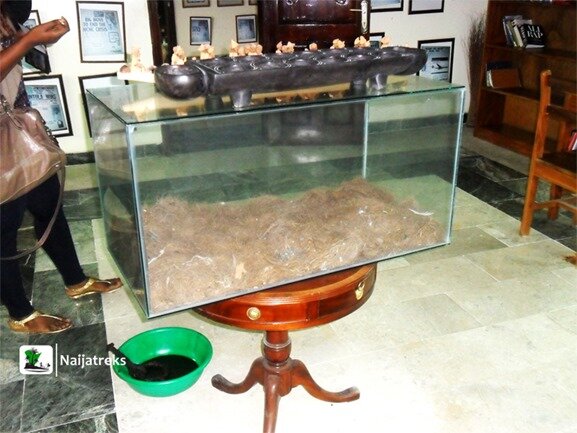
– The clear glass box within which lies the material from the original bedding Lecqi used.
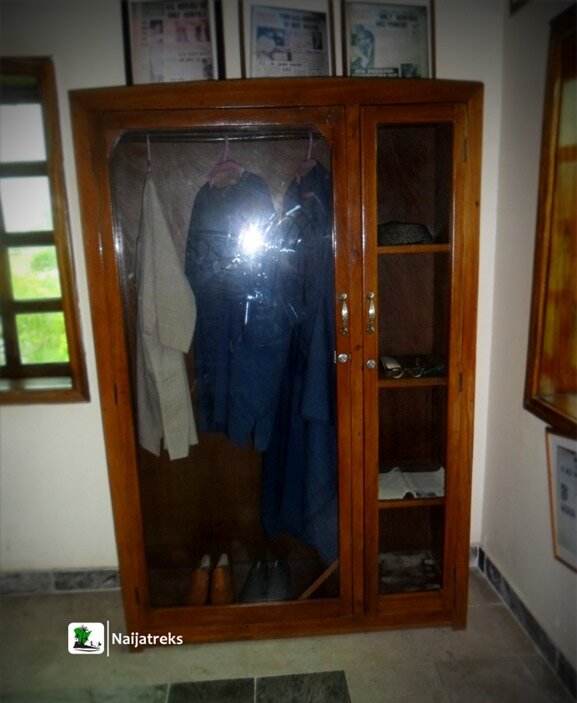
– Awolowo’s clothes and wardrobe.
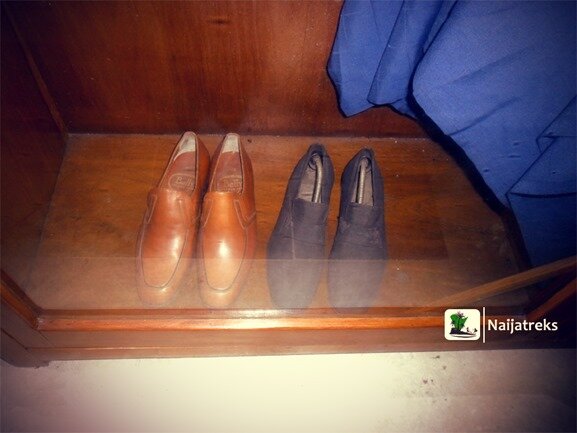
– Awolowo’s shoes.
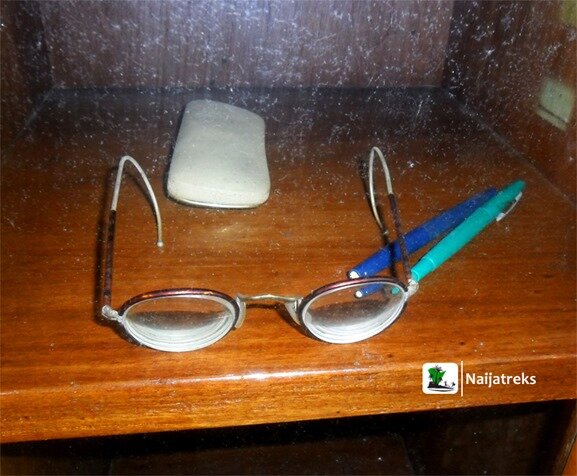
– Awo’s eye glasses.
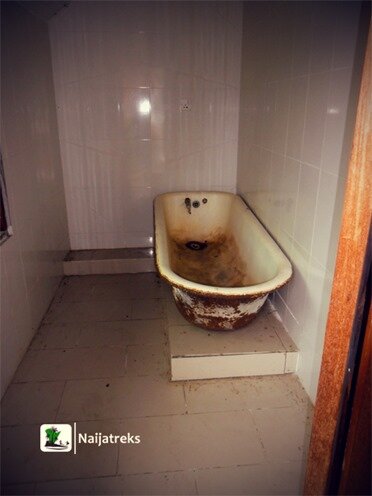
– Lecqi’s bath tub.
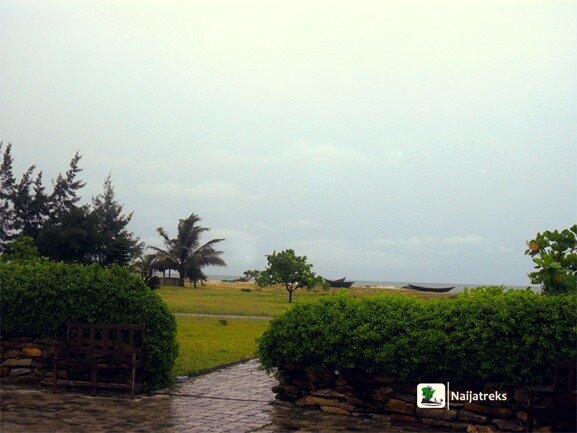
– The beach at the background.
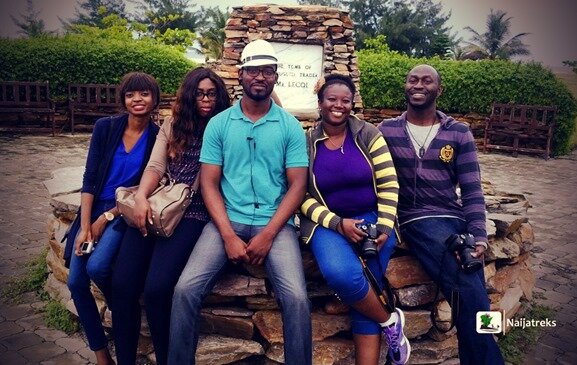
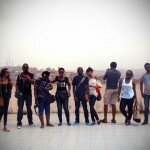
– Smile for the camera!! 😀
At Eredo…
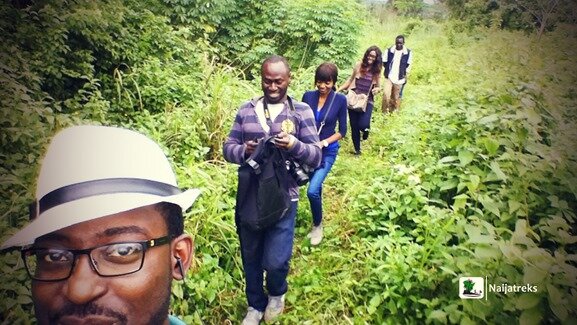
– Exploring the ancient eredo moat.
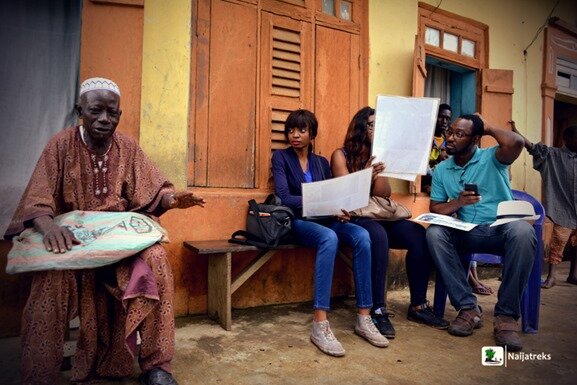
– Listening to Baba Sunny’s oral history of the Eredo moat.
At Epe Seafood Market…
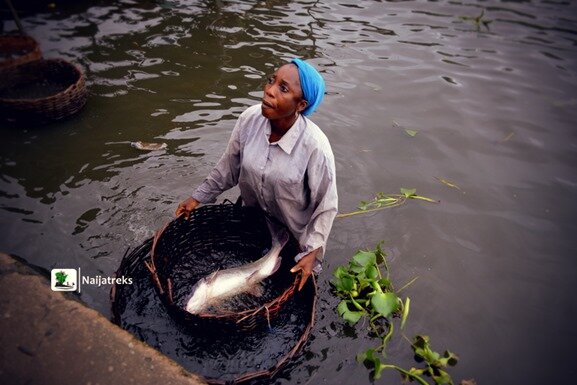
One of the market women at the market, catching a big fish from the edge of the lagoon.
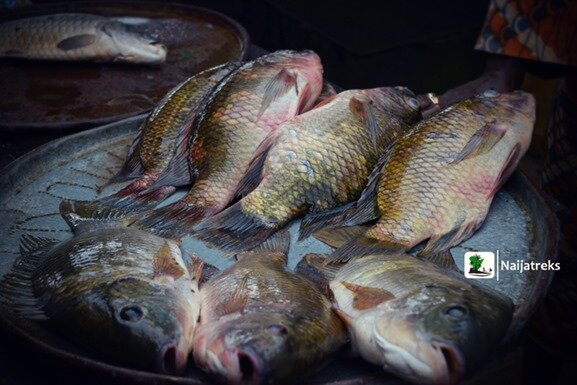
– Glorious fishes at the market.
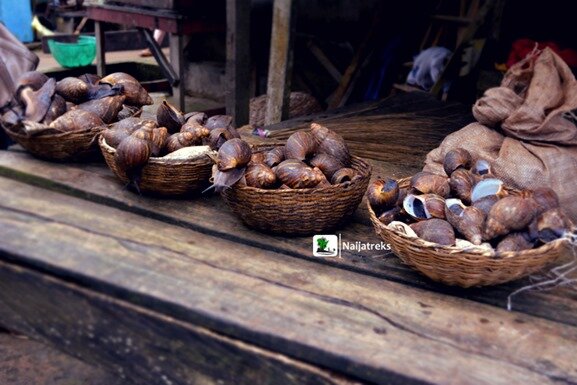
– Awesome bug snails at the market.
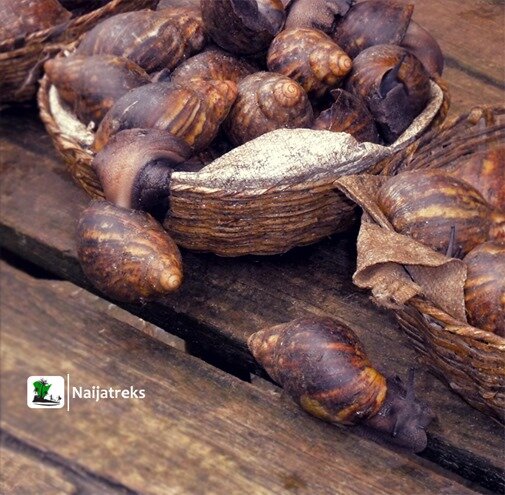
– Snails attempting ‘jailbreak’ from their basket prison.
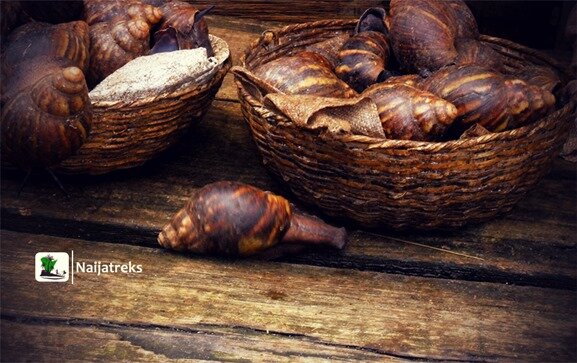
– More jail-breaking things.
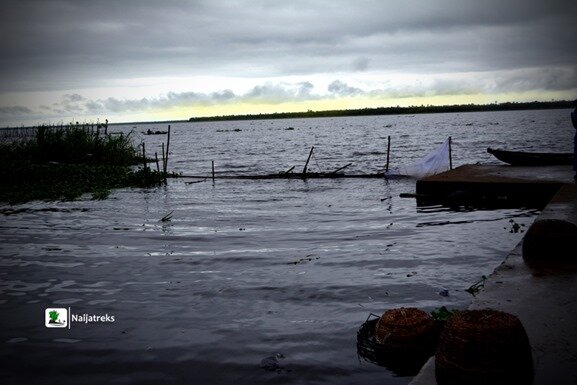 – Sunset at Epe. Sad we couldn’t wait to watch the complete action.
Share with friends..


You may also like...
-
 Sungbo’s Eredo in Ijebu Discovered: One of the Largest Archeological Phenomena South of the Sahara Desert
-
 The Sweet Serenity, Salt, Sea & Sands of Eleko Beach, Lagos
-
![Queen of Sheba’s Tomb in Ijebu Ode: For those Who Don’t Believe [Photos]](/wp-content/uploads/2014/05/QueenofShebatomb_OkeEiri3_Naijatreks-150x150.jpg) Queen of Sheba’s Tomb in Ijebu Ode: For those Who Don’t Believe [Photos]
Queen of Sheba’s Tomb in Ijebu Ode: For those Who Don’t Believe [Photos]
-
 Tarkwa Bay: The Treasure Island in Lagos
-
 See Photos of Naijatreks’ recent trip to Ibadan- ‘The City of Brown Roofs’
-
 Our last Trip for the Year: A Trip to Idanre Hills and a Chance to Experience the amazing Mare Mountain Climbing Festival -December 2014

This article was written by Adedolapo George
Adedolapo George is a vibrant member of the Naijatreks Team. She is a Zoologist, Social Media Manager, Foodie and Photographer. She is an avid learner and traveler. Seeing the world beyond the stereotype is her ultimate motivation for whatever she does. 'Naijatreks' is a product name registered under the Ntreks brand, which is also duly registered by Nigeria's Federal Corporate Affairs Commission. The contents on this blog are re-usable. However, it must be ensured that it is linked back to this blog, and correctly attributed to Naijatreks. Please do not edit, rewrite or commercialize the original works on this blog without direct and written permission from the Founder (Folarin Kolawole). For inquiries and advert placement on the blog, kindly contact us at info-naijatreks@doc.com or naijatreks-doc@gmail.com.
7 comments:
Sooooooooooo sad I missed this trip. I already made plans to pay for it and the day before I was going to, I learned I had to travel for an emergency. And then, after the tour was postponed, I realized it was the same weekend as Wed Expo.
It’s so interesting where Lekki gets its name from!
@Berry…awwww. We are so sorry we had to change the date We definitely hope to have you on one of our trips soon ok.
Nice photos. Heard about your trips through a friend. You guys are awesome.
You guys rock! Keep it up Naijatreks!
Lovely narrative of your trip. You guys had such a rich experience!
Just a quick tip: The museum probably didn’t inform you of this but it is recommended that when taking pictures of artifacts such as clothes, flash photography should not be used so as to help with the preservation of these items. Most museums around the world do not permit flash photography in certain sections for preservation purposes.
Great blog! I’m living your adventures vicariously through you guys.
@Ola…thanks for stopping by and thanks also for the tip. We will make sure we switch off the camera flash next time we go visiting museums.
Hello. Loved reading about your trips. Do you know if there are specific days that the Epe Fish Market opens?