info-naijatreks@doc.com
- rss
- youtube

International Mountain Day 2012: A call to protect our Idanre, Obudu, Effon, Jos, Mambilla and Adamawa lands.
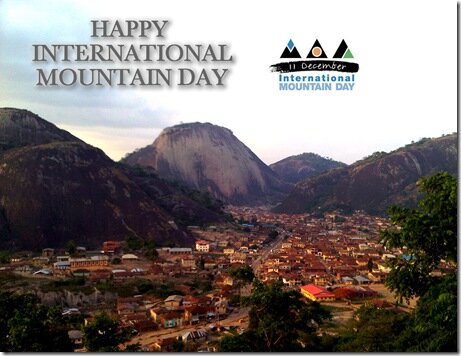
The challenges faced by mountain people have been and are, well, mountainous. The theme of this year’s International Mountain Day is exactly these challenges.
Today is International Mountain Day 2012, and we are “Celebrating Mountain Life”.
Mountains cover approximately one-quarter of the world’s surface and are home to one in ten of its people. These people are among the world’s poorest and most disadvantaged. They frequently face political, social and economic marginalization and lack access to such basic services as health and education. Moreover, current global challenges such as climate change, economic developments and population growth exacerbate the hardships they face.
Over the generations, mountain people have learned how to live with the threat of natural hazards and have developed well-adapted and risk-resilient land-use systems. However, there is growing evidence that many mountain regions have become increasingly disaster-prone over the past few decades.
Mountains are characterized by massive global diversity – from tropical rain forests to permanent ice and snow, from climates with more than 12m of annual precipitation to high?altitude deserts, and from sea level to almost 9000 m in altitude. They are the water towers of the world – providing freshwater to at least half of the world’s people. However, mountains are also high-risk environments; avalanches, landslides, volcanic eruptions, earthquakes and glacial lake outburst floods threaten life in mountain regions and surrounding areas. Mountains play an important role in influencing global and regional climates and weather conditions.
The International Year of Mountains ten years ago led to the adoption of resolution 57/245, in which the General Assembly designated 11 December as International Mountain Day. Since then, mountains have gained an increasingly high (pun intended) profile on agendas at all levels.
Written by, UNRIC Nordic Desk
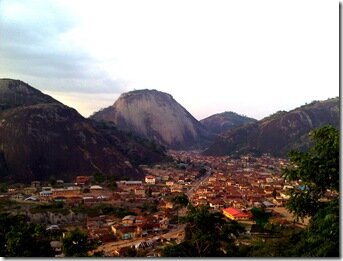 “Idanre town tucked between peaks of gigantic granite mountains
(south-west Nigeria)”
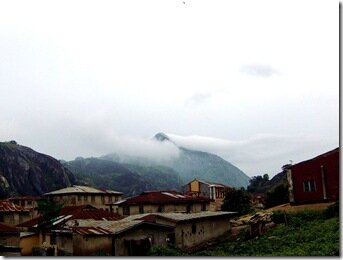
“Idanre Hills (south-west Nigeria)”
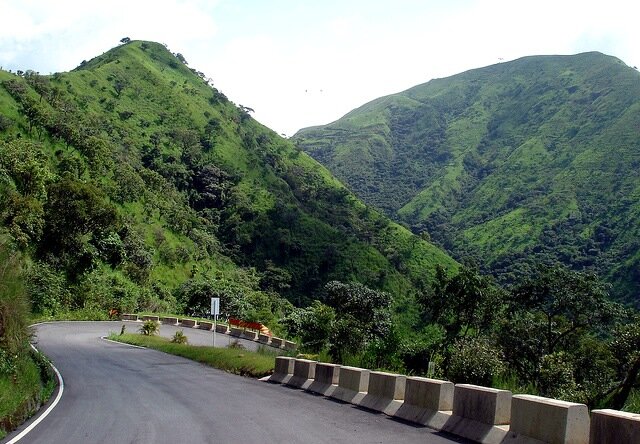 “Obudu Mountain (eastern Nigeria)”
Picture credit: www.africasustainabilityreview.com
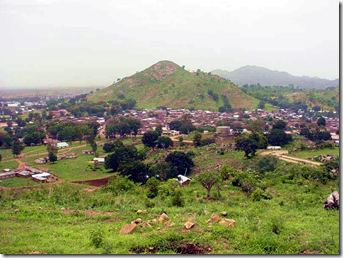 “Kerang Volcanoes, Jos Plateau (north central Nigeria)”
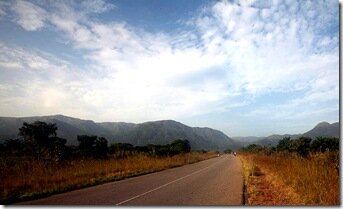 “Kerang Volcanoes, Jos Plateau (north central Nigeria)”
Picture credit: www.flikr.com
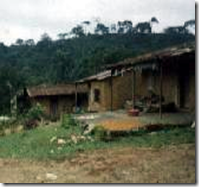 “Abake village at the top of Effon Ridge, Olumirin waterfalls (south-west Nigeria)”
Related Posts:
Idanre Hills- The City of Caves and Inselbergs
Mare Festival Day-2: The Rise of Idanre’s Champion Mountain Climber
”I stood on the Mambilla and I thought of Obudu”
Travelling the Devil’s Elbows of Obudu Mountain
The Volcanoes of Jos Plateau- Get Your Pants Dirty
Shere Hills- A Charming 1,829m Pile of Rocks
The Seven Plunges of Arinta- Let’s go chasing waterfalls!
New Waterfalls discovered in Effon-Alaaye, Ekiti State
Share with friends..


You may also like...
-
 Tell the World About Your Nigerian Hometown! #Unveilmynaija
-
 Social Media Week is here and Black Travel Bloggers are storming Lagos live #VisitNaija
-
 Lagos Carnival 2014: The Ikoyi Road Show in Photos
-
 Port-Harcourt Carnival sets the City Ablaze!!! Boat Regatta is tomorrow!!!
-
 Final Dates Announced for Osun Osogbo 2014!
-
 Super Count down… Lagos Carnival 2014 is 13 days to go!

This article was written by Folarin Kolawole
Founder of Naijatreks, Nigerian-born Folarin Kolawole is a geologist, travel writer and researcher. When not at work, he travels the length and breadth of Nigeria, exploring, taking photos and writing about her numerous hidden tourist potentials. 'Naijatreks' is a product name registered under the Ntreks brand, which is also duly registered by Nigeria's Federal Corporate Affairs Commission. The contents on this blog are re-usable. However, it must be ensured that it is linked back to this blog, and correctly attributed to Naijatreks or the author. Please do not edit, rewrite or commercialize the original works on this blog without direct and written permission from the Founder (Folarin Kolawole). For inquiries and advert placement on the blog, kindly contact us at info-naijatreks@doc.com or naijatreks-doc@gmail.com.
2 comments:
Good one Naijatreks.
@myne_whitman:disqus awww…thanks Myne