info-naijatreks@doc.com
- rss
- youtube

Onikan National Museum, Lagos: No Cameras Allowed but I snuck mine in.
“He-He-He…I pray the spirit of wàká and wanderlust won’t lead me into wàhálà one day o!…”
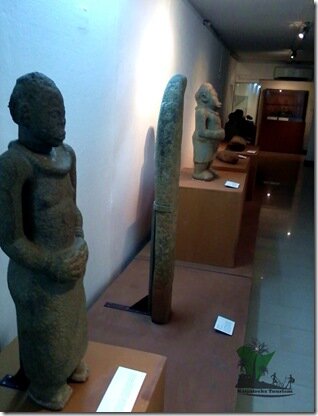
Nigerian Museums ban the use of cameras within their premises, but I broke the rules at the National Museum in Onikan, Lagos. It wasn’t my fault though, I could not just resist the spell-binding aura that enfolded the ancient figures within the building.
Corridors clad in clean white paint house numerous figures of stone, terracotta and bronze, all neatly arranged along the walls. The spot-lighting and cool air-conditioning embraces the curious visitor and welcomes him into the world of our ancestors, a world that has several lessons to teach our generation- for those who care to listen and learn though.
A Benin bronze head starred at me from a corner of one of the rooms at the museum, I drew closer to have a better look, and behold it was one of the popular cultural symbols of Nigeria; one I had seen in many magazines and web pages. I bent closer to read the small note written beneath it. I read fast, trying to consume all the facts and figures about the discovery and age of the artefact. A set of terracotta figures standing near-by caught my attention and I quickly moved to take a better look at them. They were ancient sculptures excavated from the sacred shrines of Ile-Ife. I read the brief notes on them and slowly observed the details on the figures- the careful and dexterously crafted eyes, lips, ears and hair-styles, the unique details on the head gears, bracelets and necklaces- all struck me with undefeatable awe.
As I departed from the rooms, an eerie feeling parted with me. It was as if I had just dined with my ancestors. The figures appeared to exude self-confidence, self-discipline, determination and unwavering faith in the supernatural. These were probably the ideals and values that sustained the society during the days of our ancestors. How sad that these values had diminished over the centuries. The low tourist traffic at the museum gives credence to the fact that our generation does not value history. This is a loop hole that needs to be filled.
I marvelled at the various pictures of cultural and natural potentials across the country, exhibited on the walls of a central courtyard within the main museum building, after which I proceeded to a detached building at the back of the museum. The detached building is the garage which houses Murtala Mohammed’s car- the one in which he was assassinated on February 13, 1976.
Murtala Ramat Mohammed was the fourth President of Nigeria, who was assassinated in a military coup while his car was enroute to his office at Dodan Barracks, Lagos. Today His portrait adorns the 20 Naira note and he stands as one of the only three national heroes of the Nigerian Republic (Wikkipedia).
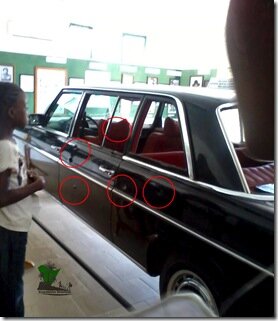
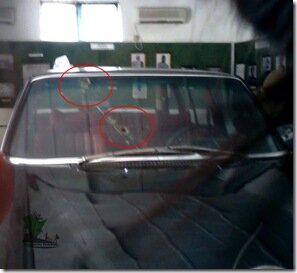
Bullet holes riddled the windscreen, side windows, doors and red-leather furnishings of the Mercedez Benz 230.6 car. I met a young couple and their two kids there, listening to the enthralling political stories of ancient Nigeria being narrated by on of the female custodians at the museum. The kids bent forward to observe the deep bullet hole in the metal doors of the car. Broken glass still littered the chairs and floors of the car. Everything had been kept intact since the assassination. It was an amazing experience at the garage.
I left the museum with a great appreciation of history, of culture and of my dear nation Nigeria. I learnt a few lessons, and these shall abide with me for years to come.
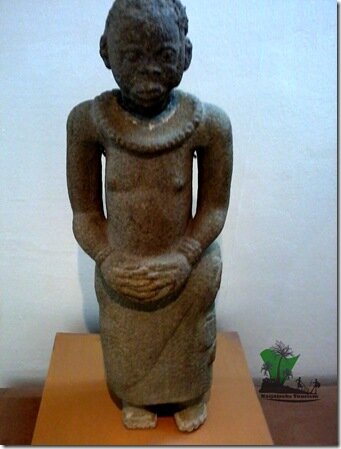 – Figure of Idena (12th – 15th century): Made of Biotite gneiss and iron nails, Idena, the gatekeeper was said to watch over the roads leading to the Ore Grove, sacred to Ore, the god of hunting. Ore is associated with Ogun, the god of iron. Idena’s hair is covered with wrought0iron nails fitted into holes drilled in the stone. Most of the nails, now broken, once had spiral heads. Idena was discovered at Ore Grove in Ile-Ife.
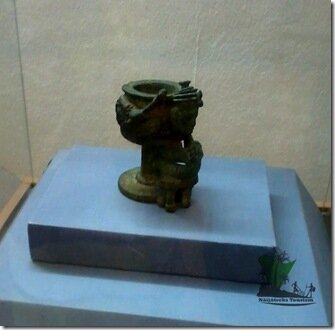
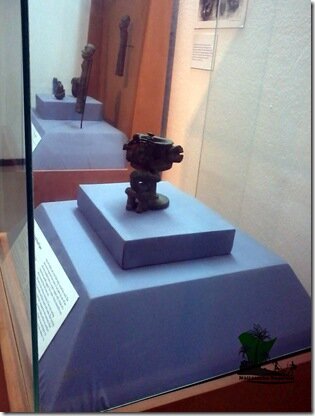 Ceremonial Vessel with Royal Figure (14th – early 15th century): An intricate vessel made of copper alloy, depicting a royal figure, possibly a queen, curled around a pot supported by a spool-shaped stool, similar to a stone figure also found at Ore Grove. The astonishingly complex figure wears a multilayered crown that still bears traces of black paint; a profusion of beaded necklaces, bracelets, toe rings and ankle chains. It was discovered in 1957 by workmen levelling ground for construction at Ita Yemoo in Ile-Ife.
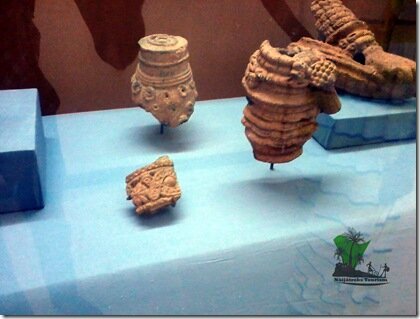 – Pottery works and broken arms with bead patterns from Ore Grove in Ile-Ife.
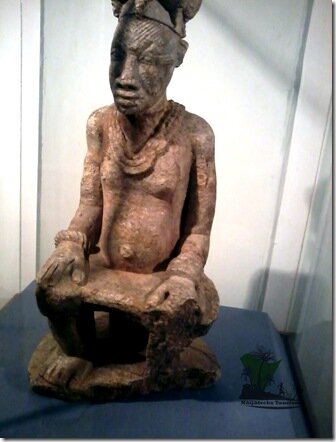
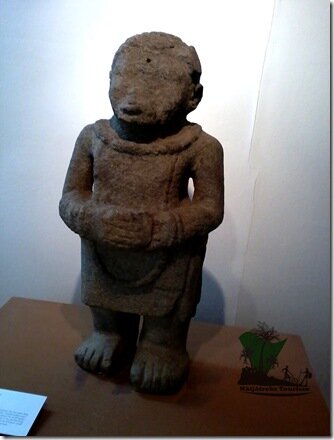
– A soapstone figure from Essie in Kwara State.
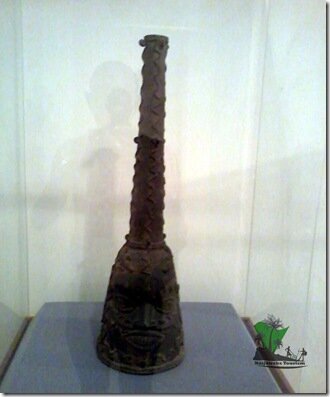 – An ancient bronze mask and crown on display at the museum.
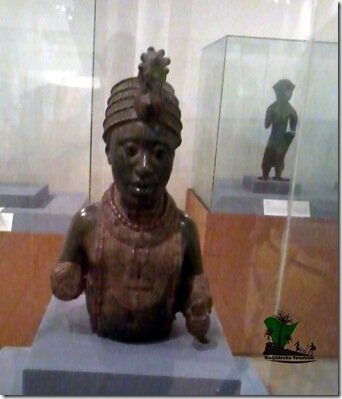
– Another Ife figure on display at the museum.
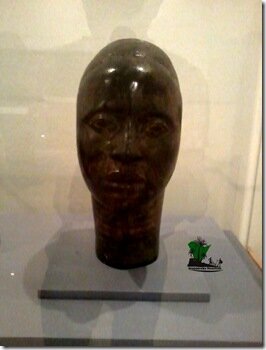
– An Ife Head on display at the museum.
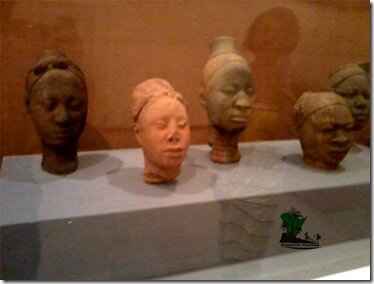
– More Ife Heads on display.
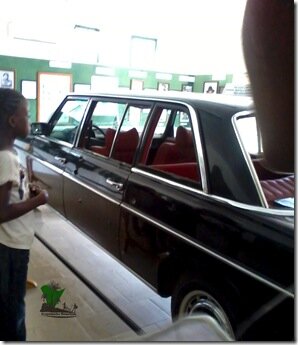 – Murtala Mohammed’s bullet-riddled car. Notice the bullet holes indicated by the red circles in the photos below.
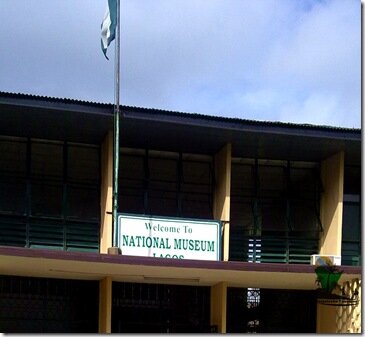
The entrance to the National Museum at Onikan round-about, Ikoyi, Lagos.
Share with friends..


You may also like...
-
 Wowed by the sun, sand and sea of the Atican Beach, Lekki
-
 Tarkwa Bay: The Treasure Island in Lagos
-
 Victoria Island Gone Wild: Another Bundle of Nuisance or Tourism Potential?
-
 Enchanted by the Spell of this Lasgidi
-
 Once upon the Lagos Lagoon…
-
 The Coconuts of Lagos Lagoon- Tourism, Trails & Potentials

This article was written by Folarin Kolawole
Founder of Naijatreks, Nigerian-born Folarin Kolawole is a geologist, travel writer and researcher. When not at work, he travels the length and breadth of Nigeria, exploring, taking photos and writing about her numerous hidden tourist potentials. 'Naijatreks' is a product name registered under the Ntreks brand, which is also duly registered by Nigeria's Federal Corporate Affairs Commission. The contents on this blog are re-usable. However, it must be ensured that it is linked back to this blog, and correctly attributed to Naijatreks or the author. Please do not edit, rewrite or commercialize the original works on this blog without direct and written permission from the Founder (Folarin Kolawole). For inquiries and advert placement on the blog, kindly contact us at info-naijatreks@doc.com or naijatreks-doc@gmail.com.
8 comments:
Please correct the labeling errors Esie is in Kwara state not Osun state also the bronze portrait labelled Igbo-ukwu is an Ife object
@Ngozi…your observations and corrections are true..thanks so much…they’ll be effected immediately
This is absolutely the best the best place to spend a free hot afternoon. And I agree with you a visit there feels like communing with our ancestors. I like that the museum has been upgraded in the right direction though the information screens had no audio in my last visit. I wish they aggressively marketed the museum to the public & maybe create a suya/ shawarma joint there just to draw people, they already have the land space for such….
@Chiaka…your observations are on point…a lot of Lagosians don’t actually know about the wealth of great stuff exhibited at the museum. There’s indeed a lot of work left to be done. Thanks so much for the comment.
Please I need the museum’s contact number for booking and information purpose, I want to bring my student for excursion. I work in a State Secondary School and Excursion is part of their scheme. Thanks.
@Adekoya Dare…I am so sorry, we do not have the contact of the museum at the moment. We will see if we can and get back to you through your email. Thanks.
That’s great. i was there in 2013. How wonderful to see all this master pieces together. I also was in Ile-Ife, but Obafemi Olowolo University was on strike and I bad saw their museum…I want to comeback! I love Nigeria and the people from there. Everybody must to know Nigeria! Thanks Mr. Kolawole
Dear Mister Folarin Kolawole,
On a bronze plaque I saw “EMKU 02”. One year later I saw “MKU 02” on a bronze head of an Oba.
Maybe you can help me to explain what “EMKU 02” and “MKU 02” mean?
Maybe MKU is the name of a village? Or the name of a bronze caster?
And maybe “02” means that this bronzes were made in the the year 2002?
Or maybe I am totally wrong and you can give me the good explanation?
In any case, your answer will make me very happy!
Thank you.
Best regards,
Pierre